GSM Explained: What Fabric Weight Means for Tees, Hoodies and Denim
GSM is the first number founders meet in fabric — and the first one they misuse. It gets treated as a quality score, quoted without a garment attached, and compared across fabrics it was never meant to compare. GSM is simply how much one square metre of a fabric weighs — and that one number predicts how the cloth drapes, wears, prints and ships.
This guide explains what GSM measures, the working weight bands for tees, hoodies and denim, why a higher number is not a better garment, and how the weight gets agreed in your spec and proven on your sample.
The Short Version
- GSM means grams per square metre: the weight of the fabric itself, before it becomes a garment.
- Tees run light at around 160–180 GSM, standard at 180–220, and heavyweight at 240 and above. Hoodies run 280–320, 350–400, and 400–450+.
- Denim is measured in ounces per square yard instead — the same idea in an older unit, running from lightweight up to 10 oz through heavyweight at 13.5 oz and up.
- GSM is not quality. Yarn, knit construction and finishing decide how a fabric wears; GSM only decides how heavy it is.
- The weight is agreed in the tech pack and approved on the sample — the garment in your hand, not the number on a swatch card.
What GSM Actually Measures
Cut a square of fabric one metre by one metre and weigh it. The result, in grams, is the GSM. It is a property of the cloth alone — it says nothing yet about the garment, the fit or the finish. What it does do, reliably, is predict behaviour. A heavier cloth drapes with more structure, feels more substantial in the hand, holds embroidery more cleanly, and costs more to ship on every single order. A lighter cloth moves, breathes and folds smaller.
That is why GSM belongs at the start of a product decision, not the end. The same tee pattern cut in 170 GSM and in 250 GSM produces two different products — one fluid and easy, one dense and structured — for two different customers. The number is how you choose between them deliberately, instead of discovering the difference when the bulk lands.
The Working Bands
| Garment | Light | Standard | Heavyweight |
|---|---|---|---|
| Tees | Around 160–180 GSM — fluid, warm-weather | Around 180–220 GSM — the everyday core | 240 GSM and up — dense, structured |
| Hoodies | Around 280–320 GSM — lighter fleece and layering pieces | Around 350–400 GSM — the core hoodie weight | 400–450 GSM and up — heavyweight fleece |
| Denim (oz) | Up to 10 oz — soft drape, summer weight | 10–13 oz — the classic jean | 13.5 oz and up — rigid, workwear feel |
Denim's ounces are the same idea in an older unit: ounces per square yard. The rough relationship is that one ounce per square yard works out at about 34 GSM — so a midweight 12 oz denim sits near 400 GSM in knit terms. The trades kept separate units; the thinking is identical. Pick the band for the garment you want to sell, then spec the exact cloth inside it.
What the Bands Feel Like in Practice
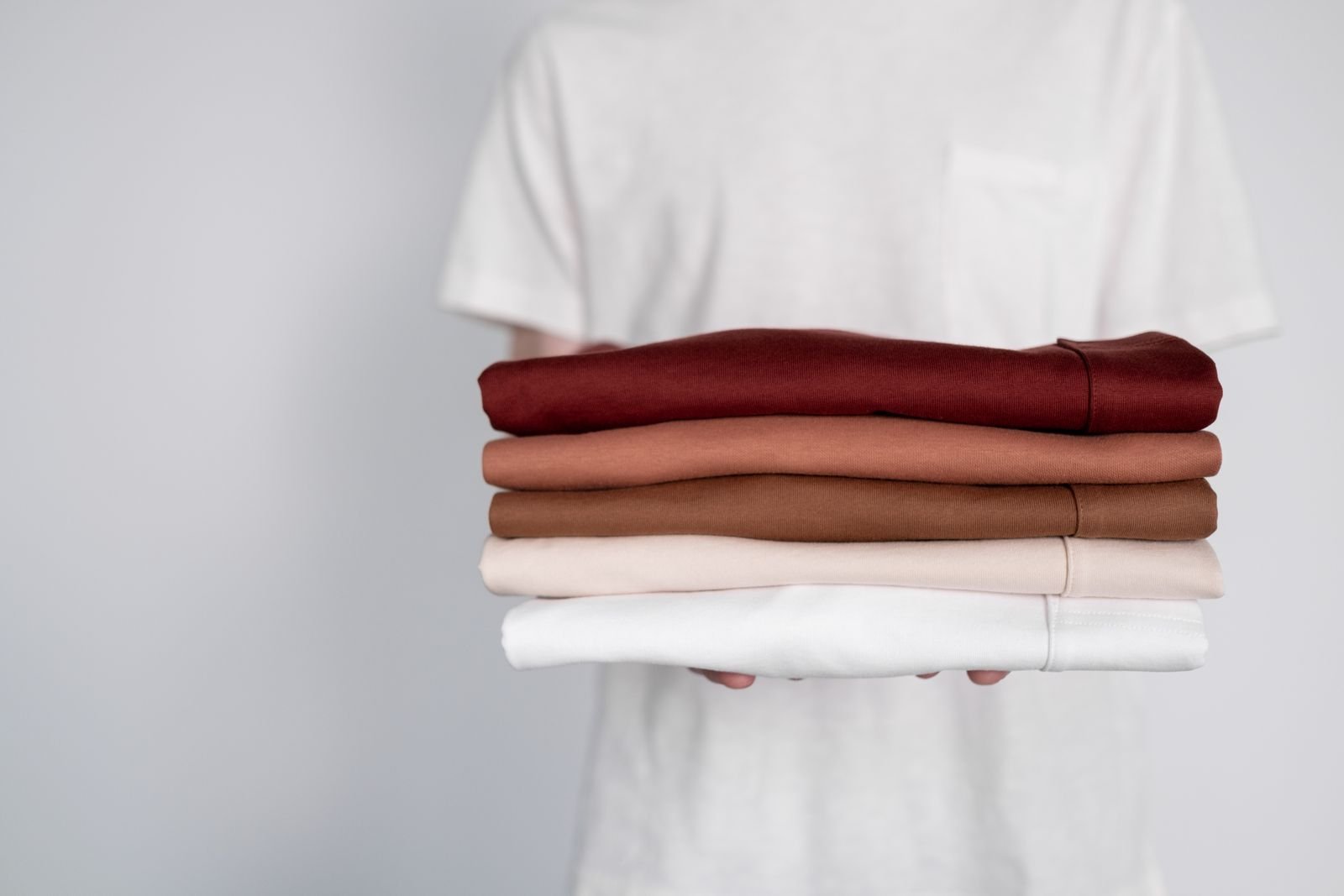
Tees. A light tee drapes close and wears cool; it is the right cloth for fluid fits and warm-weather drops. The standard band is where most core tees live — enough body to hold a print and a shape, light enough to wear all year. Heavyweight tees stand away from the body, hold a boxy silhouette, and read premium the moment they are picked up — at the cost of warmth and freight weight.
Hoodies. Light fleece suits layering pieces and transitional drops. The standard band carries most hoodies: structured, warm, forgiving across fits. Heavyweight fleece — up to the 450 GSM band — is a deliberate product statement: a hoodie that holds its own architecture, which is exactly why it anchors premium streetwear.
Denim. Light cloth for wide leg and flare, midweight for the year-round core jean, heavyweight for rigid workwear character.
GSM Is Not Quality
Two fabrics at the same GSM can wear completely differently. The yarn decides softness and strength — long, even fibres spin into smoother, stronger cloth than short, uneven ones at the identical weight. The knit construction decides recovery and stability: how the loops are formed governs whether a garment grows, twists or holds. The finishing decides the rest — how the cloth was dyed, compacted and treated for shrinkage before it ever reached the cutting table.
This is why "higher GSM" is not an upgrade path. A badly made 450 GSM fleece is just a heavy, badly made fleece: it will still twist, pill and lose its ribbing if the yarn, knit and finishing are poor. Weight is a product decision; quality is a manufacturing decision. Judge quality on the washed sample, and use GSM to choose the product, not to grade it.
GSM Is Also a Freight and Cost Decision
Fabric is bought and moved by weight as much as by area, so GSM follows the garment through its economics. Heavier cloth costs more per garment to source, and heavier garments cost more to freight — and that freight share lands inside your true per-unit cost on every order. A heavyweight decision made for the hand feel is also a margin decision; cost the garment at the weight you actually intend to sell.
Hoodie GSM guide: the fleece bands in depth →
Denim weight explained: what oz should your jeans be? →
How GSM Gets Agreed — and Checked
The weight goes into the tech pack as part of the fabric spec: GSM, fibre composition, knit type and finish, together. One number on its own is not a spec — "400 GSM" without the composition and construction leaves the two most important variables open. During sampling, the fabric is sourced to that spec and the sample is sewn in the actual cloth. That sample is where you judge the weight: on a body, after a wash, against the product you meant to make. If the hand feel is wrong, the spec changes before bulk — never after.
Factories verify GSM by cutting and weighing a measured piece of the cloth, and a founder can sanity-check a sample the same way — weighed against the same style in a known fabric. The number starts the conversation; the sample settles it.
Why 450 GSM heavyweight fleece became the standard →
Get a costing at your fabric weight →
Frequently Asked Questions
What does GSM mean? Grams per square metre — the weight of one square metre of the fabric. It predicts how the cloth drapes, feels, decorates and ships, which is why it is agreed in the spec before sampling.
What GSM is best for a t-shirt? There is no single best — there is a band for the product. Around 160–180 GSM for light, fluid tees; 180–220 for the everyday core; 240 and up for dense, structured heavyweight tees.
What GSM should a hoodie be? Most core hoodies sit in the 350–400 GSM standard band. Lighter fleece at 280–320 suits layering pieces; 400–450 and above is heavyweight territory, chosen when structure and substance are the product.
Is higher GSM always better quality? No. GSM is weight, not quality. Yarn, knit construction and finishing decide how a fabric wears and washes — a heavy cloth made badly is still made badly. Judge quality on the washed sample.
Why is denim measured in ounces instead of GSM? Tradition: denim is traded in ounces per square yard. It is the same measurement in an older unit — one ounce per square yard is roughly 34 GSM, so a 12 oz denim is near 400 GSM.
How do I check the GSM of my sample? The direct way is to cut and weigh a measured piece of the cloth. In practice, judge the sample garment itself — its weight in the hand against a known reference, its drape on the body, and how it behaves after washing — and raise any mismatch before bulk, while the spec can still change.
Ready to cost your style?
Send the product, quantity and fabric you're planning — we'll cost the actual style, 100 per style, sample first.