Denim Weight Explained: What Oz Should Your Jeans Be?
Denim is specified in ounces, and that one number decides how your jeans drape, which season they belong to and how long they take to break in — before the design gets a say. Pick the weight for the jean you want to sell, not the heaviest cloth you can find.
This guide walks the three weight bands, what each actually wears like, and the parts of the denim spec that matter as much as the ounce count.
The Short Version
- Denim weight is ounces per square yard — the shorthand that predicts drape, structure and season.
- Up to 10 oz is lightweight: soft, fluid, warm-weather cloth — wide leg, flare and denim shirts live here.
- 10–13 oz is the midweight core: the classic jean, year-round, where most first denim styles should start.
- 13.5 oz and up is heavyweight: rigid, structured, slow to break in — the workwear and raw-denim feel.
- Weight interacts with wash and shrinkage, so fit gets approved on a washed sample in the actual denim.
What the Ounce Number Means
Denim weight is the weight in ounces of one square yard of the fabric. It plays the same role for denim that GSM plays for knitted fleece: a single number that predicts how the cloth behaves. Sew the same five-pocket pattern in 10 oz and in 14 oz and you get two different products — one that drapes and moves, one that stands up on its own.
Weight also follows the garment home. Heavier jeans cost more to ship per unit, wear warmer, and take longer to soften. The ounce number is a product decision, a comfort decision and a freight decision at once.
The Three Bands
| Band | Weight | Wears like | Best for |
|---|---|---|---|
| Lightweight | Up to 10 oz | Soft drape, fluid, breaks in quickly | Summer jeans, wide leg and flare, denim shirts and jackets |
| Midweight | 10–13 oz | The classic jean hand — structure with give | Straight and tapered core styles, worn year-round |
| Heavyweight | 13.5 oz and up | Rigid, structured, slow break-in | Workwear-inspired and raw denim styles |
Lightweight: up to 10 oz
The fluid band. Lightweight denim drapes instead of standing, which is exactly what wide leg and flare patterns need to read correctly, and it wears comfortably in warm weather. It breaks in fast and feels broken-in almost immediately. The trade-off is structure: a light cloth won't hold a sharp, architectural silhouette.
Midweight: 10–13 oz
The core band, and the starting point for most first denim styles. Enough body to read as a proper jean, enough give to be comfortable from the first wear, and forgiving across fits and washes. If your style is a straight or tapered jean meant to sell all year, this is your ground.
Heavyweight: 13.5 oz and up
The rigid band: dense cloth, strong structure, and a break-in period measured in wears, not washes. Heavyweight is a deliberate product statement — workwear heritage, raw denim culture — and it asks more of everything: stronger sewing, warmer wear, heavier freight. Choose it when the weight is the point.
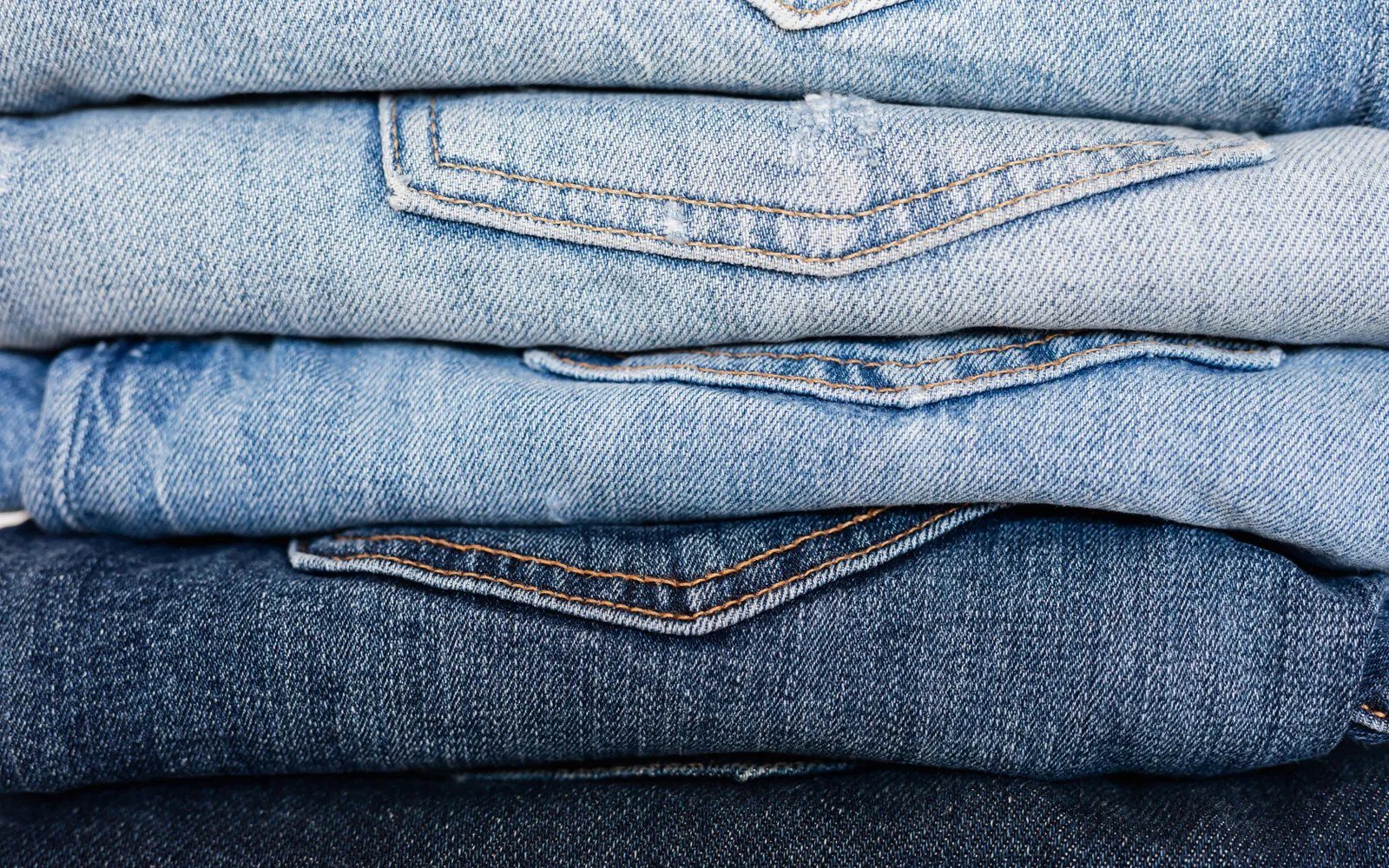
Weight Isn't the Whole Denim Spec
Rigid vs stretch. Rigid denim is all cotton and breaks in to the wearer's body. Stretch denim carries a small amount of elastane and gives from day one. They fit differently, grade differently and suit different customers — the choice belongs in the spec next to the weight.
Shrinkage. Denim moves in the wash. Sanforized cloth is pre-shrunk for stability; unsanforized denim shrinks significantly on its first washes and has to be patterned and bought with that movement planned. Either way, fit is approved on a washed sample — the garment the customer receives is a washed garment.
Colour and depth. Indigo depth and yarn character change how a weight reads: a deep, slubby 12 oz can look and feel more substantial than a flat, even 13 oz. Weight sets the structure; the yarn and dye set the personality. Judge both on the washed sample, where the customer will meet them.
Wash. The wash changes the hand feel as much as the colour: heavy stone or bleach treatments soften and lighten the cloth's character. A weight chosen on raw fabric has to be re-checked after the wash you actually plan to sell.
A Word on Selvedge
Selvedge is not a weight. It is a weaving method — denim woven on older shuttle looms with a self-finished edge, the coloured line you see inside the cuff. Selvedge denim comes in light, mid and heavy weights alike, and the word tells you about the loom and the edge finish, not the ounces. Brands choose it for the heritage story and the cuff detail; customers who care, check for it. If your style trades on that story, spec selvedge by name and choose its weight the same way as any other denim — by fit, season and wash. If it doesn't, the same money usually works harder in construction and wash quality, where every customer feels it.
Choosing for Your First Denim Style
Start with the fit: fluid fits want lighter cloth, structured fits want body. Then the season your drop lands in, then the wash. Spec the band, sample in the actual denim, wash the sample the way production will, and approve the fit on that garment.
Denim fits explained: straight, tapered, wide leg, flare and barrel →
Get a costing for your denim style →
Frequently Asked Questions
What does oz mean in denim? Ounces per square yard of fabric. It is the weight shorthand for denim, the way GSM is for knits — it predicts drape, structure and season.
What is a good denim weight for jeans? For most core styles, the 10–13 oz midweight band: structured enough to read as a proper jean, comfortable enough to wear year-round.
Is heavier denim better quality? No. Weight is a style choice, not a quality grade. Construction, shrinkage control and wash consistency decide quality — heavy cloth badly made is just heavy.
Does denim weight affect fit? Yes. The same pattern drapes soft in 10 oz and stands rigid in 14 oz — which is why fit is approved on a washed sample in the actual denim.
What is the difference between rigid and stretch denim? Rigid is 100% cotton and breaks in to the wearer; stretch denim carries a small amount of elastane for give from day one. They fit, wear and grade differently.
What is the minimum order for a denim style? 100 units per style, with washes (colours) and sizes split inside that 100.
Ready to cost your style?
Send the product, quantity and fabric you're planning — we'll cost the actual style, 100 per style, sample first.