Sew on Demand vs Bulk Production: Which Model Fits Your Brand?
"Sew on demand" is showing up in search results and supplier pitches alike — the promise of garments made one at a time, only when a customer orders, with no stock and no risk. It sounds like the best of both worlds. It is a real model with real uses, and a real price. On demand removes the stock risk by removing the production run — and charges you for that, per unit, forever.
This guide defines the three models that get mixed up — sew on demand, print on demand and bulk cut-and-sew — and compares them honestly: unit economics, speed to the customer, quality and fit control, and who each one actually suits.
The Short Version
- Sew on demand: the garment is cut and sewn after a customer orders it. Print on demand: a stock blank is decorated after the order. Bulk: finished stock is made ahead, in a production run.
- On demand carries no dead stock — and the highest unit cost, the slowest delivery to the customer, and the least control over fit and fabric.
- Bulk reverses the trade: the lowest unit cost and full control, in exchange for committing to stock before it sells.
- The switch point is proof: once a style sells predictably, bulk economics beat on-demand economics on every repeat order.
- Bulk from 100 units per style is the middle ground — a real production run sized as a test, not a warehouse bet.
Three Models That Get Mixed Up
Sew on demand means the garment itself doesn't exist until your customer buys it. The order triggers cutting and sewing a single piece to a set pattern. You hold no stock — and every unit is a one-off production job.
Print on demand is a different thing wearing similar words: the garment already exists as a stock blank, and only the decoration happens after the order. It is fast and stock-free because the making was done long ago, by whoever made the blank — with their fit, their fabric and their weight, not yours.
Bulk cut-and-sew makes finished stock ahead of sale in a production run: your pattern, your fabric, your construction, sewn in quantity and held ready to ship. It is the oldest model in the trade, and the one every scaled brand runs on.
Side by Side
| Factor | Sew on demand | Bulk production |
|---|---|---|
| When it's made | After each customer order lands | Ahead of sale, in a production run |
| Unit economics | Highest cost per unit — every piece is a one-off job | Lowest cost per unit — cutting and sewing set up once for the run |
| Speed to customer | Production time plus shipping, on every order | Ships from stock — the making already happened |
| Fit & fabric control | Limited — set patterns and the provider's fabric range | Full — your pattern, your fabric, your construction, sampled and approved |
| Stock risk | None — nothing exists until it sells | Real — you own the run before it sells |
| Consistency | Piece-by-piece — each unit made as a single job | Run consistency — one approved sample governs the whole batch |
Why On Demand Costs More Per Unit
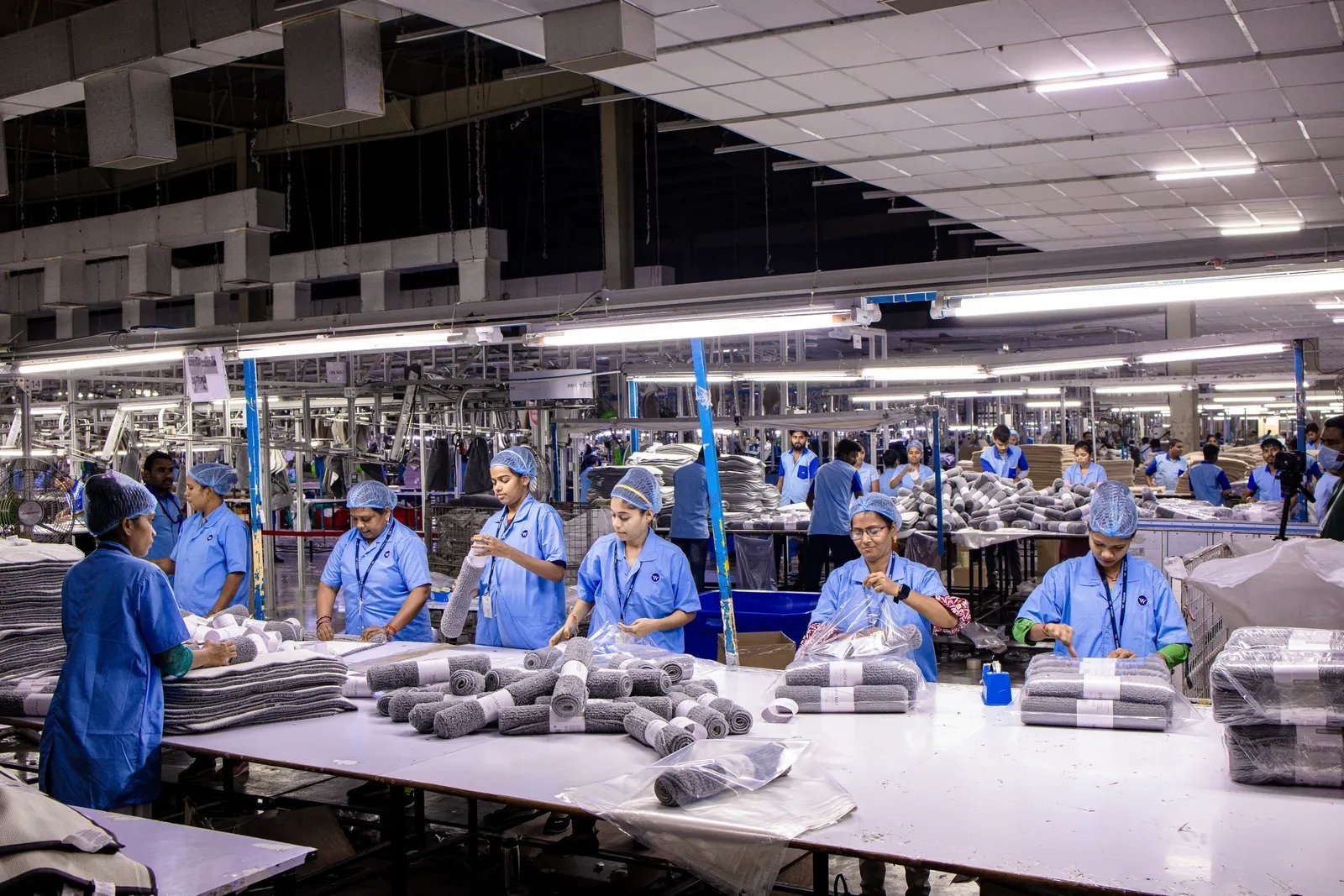
Production economics are setup economics. In a run, the pattern is laid, the fabric is cut in stacked layers and the sewing line is set once — and that setup is shared across every unit in the batch. Sew one garment at a time and the setup is paid in full by a single piece: one lay, one cut, one machine setting, one QC pass, one parcel. The per-unit gap is not a supplier's greed; it is arithmetic. On demand also hands your customer the production calendar — cutting, sewing and QC sit between their payment and their parcel, on every order, which is a delivery promise few brands can make attractively.
Who Each Model Suits — and When to Switch
Sew on demand suits testing in its purest form: unproven designs, very wide style ranges no run could fund, and one-off or personalised pieces where the single-unit job is the product. It buys information at the highest possible unit price — which is rational exactly as long as the information is what you're buying.
Bulk suits any style with predictable demand: a proven seller, a core product, a drop with an audience waiting. The moment a style sells through reliably, every repeat order on demand is paying one-off prices for a garment you already know will sell — the stock risk you are avoiding has already been retired by your own sales data.
The switch is therefore not a graduation ceremony. It is a per-style decision, made when a design stops being a question. Many brands run both permanently: bulk for the proven core, on demand for experiments at the edge of the range.
Where Bulk From 100 Sits
The classic objection to bulk is the size of the bet — and at old-style minimums, counted per colour, the objection was fair. Our position is the middle ground: bulk production from 100 units per style, with colours and sizes split inside the 100. That is a real production run — your pattern, your fabric, a sample you approve before bulk — sized as a test a first brand can fund. You get bulk economics and bulk control without betting the business on unproven stock, and when the style proves itself, the same pattern scales.
Private label vs cut-and-sew vs print on demand: the three routes compared →
MOQ explained: per style vs per colour →
How many units should your first order be? →
Cost a bulk run of your style →
Frequently Asked Questions
What is sew on demand? A model where the garment is cut and sewn only after a customer orders it. Nothing is held in stock; every unit is produced as a one-off job to a set pattern, then shipped to that customer.
How is sew on demand different from print on demand? Print on demand decorates an existing stock blank after the order — the garment was already made, with someone else's fit and fabric. Sew on demand makes the garment itself after the order, to a set pattern and a limited fabric range.
Why does sew on demand cost more per unit? Setup arithmetic. A production run shares its cutting, machine setup and QC across the whole batch; a one-off garment carries all of it alone. The gap is structural, not a markup choice.
When does bulk production make more sense? As soon as a style sells predictably. Proven demand retires the stock risk that on demand charges you to avoid — from then on, bulk gives you lower unit cost, full fit and fabric control, and stock that ships immediately.
Can I start on demand and move to bulk later? Yes, and many brands do — per style. Test on demand, then move the proven styles into bulk runs while experiments stay on demand. Note the bulk version is a new production setup: your own pattern and an approved sample, not a copy of the on-demand piece.
What is the minimum for a bulk order? With us, 100 units per style — colours and sizes split inside the 100. That sizing is deliberate: a real bulk run, with bulk economics and a sample approved first, at a quantity a first brand can treat as a test.
Ready to cost your style?
Send the product, quantity and fabric you're planning — we'll cost the actual style, 100 per style, sample first.