Embroidery vs Print: Which Should Your Design Use?
Embroidery is thread stitched into the garment. Print is ink cured onto its surface. They are not two prices for the same job — they are different finishes with different physics. Small, lasting marks belong to embroidery. Large, detailed artwork belongs to print.
This guide compares them honestly — durability, finish, fabric fit and what actually drives the cost of each — and ends with the cases where the choice makes itself.
The Short Version
- Embroidery is raised and textured, and it wears with the garment. Print is flat and detailed, and it covers ground embroidery never should.
- Chest logos, sleeve hits and cap marks are embroidery territory. Big back artwork, gradients and photo detail are print territory.
- Embroidery cost is driven by stitch count and size; print cost by colours, screens and coverage. Neither is "the cheap one" in general.
- Fabric decides some of it: heavy, stable cloth takes embroidery cleanly; very light or stretchy cloth fights it.
- Strong products often use both — embroidered chest, printed back — spec'd in the tech pack and proven on the sample.
What Each One Actually Is
Embroidery starts with digitising: your artwork is converted into a stitch file that tells the machine where every stitch lands. The design is then sewn in thread, through the fabric, with a backing stabiliser behind it. The result is part of the garment's structure — raised, textured, and as durable as the cloth itself.
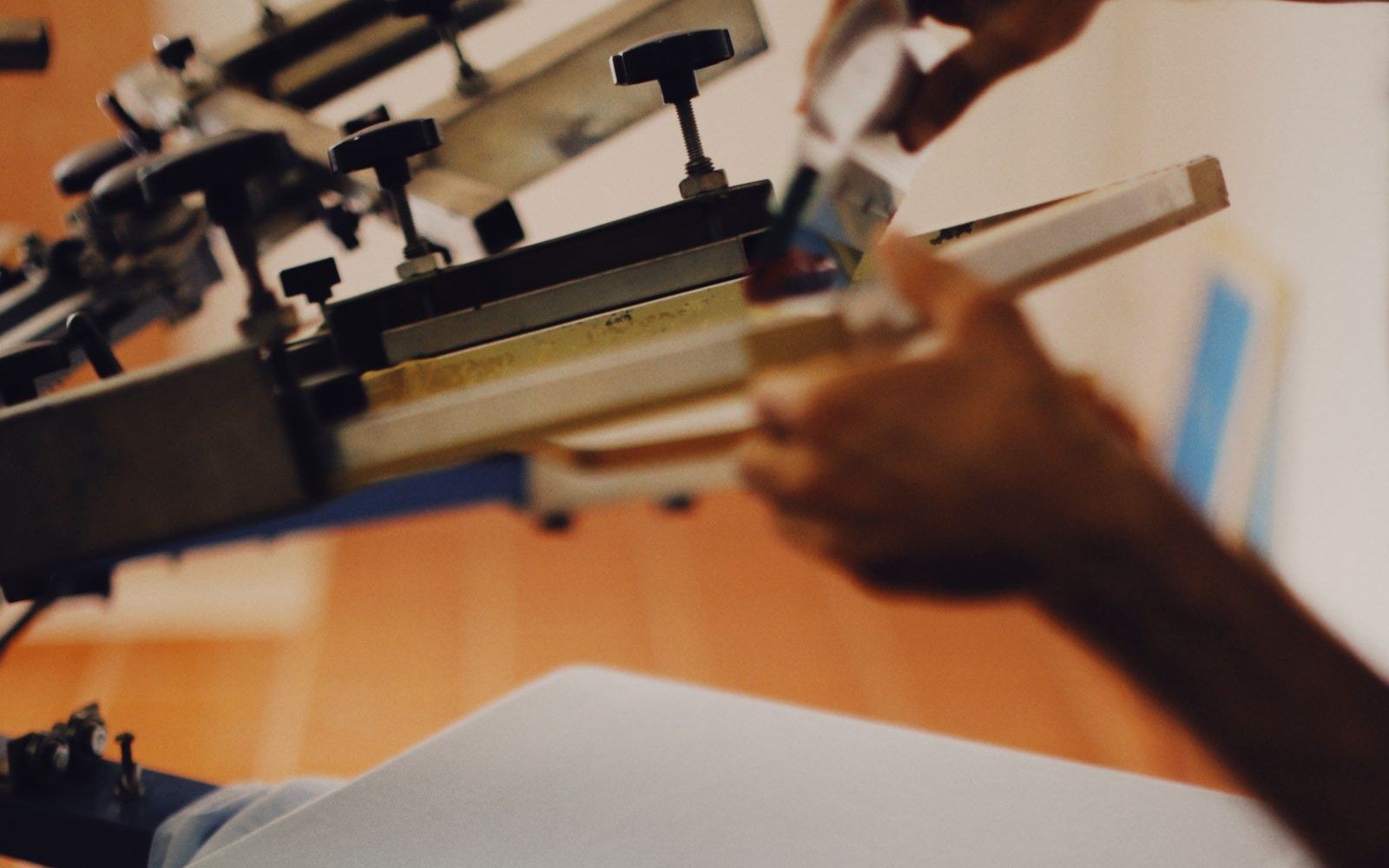
Print — screen print is the production standard — pushes ink through a prepared screen for each colour, then cures it onto the fabric surface. Variants like puff print raise the ink for a three-dimensional effect. Print sits on the garment rather than in it, which is what lets it carry fine detail, smooth gradients and very large coverage.
Side by Side
| Factor | Embroidery | |
|---|---|---|
| Finish | Raised, textured, stitched | Flat and smooth (puff print raises it) |
| Durability | Wears with the garment itself | Depends on ink, curing and washing |
| Detail | Bold shapes and lettering; fine lines blur in thread | Fine detail, gradients, photographic artwork |
| Best fabrics | Heavier, stable cloth — fleece, denim, canvas | Most fabrics, including light jersey |
| Cost driver | Stitch count — design size and density | Colours and screens, print size |
| Coverage | Small to medium marks | Any size, including full back and chest |
Where Each One Wins
Embroidery wins when the mark is small and the product is premium: a chest logo on a heavyweight hoodie, a sleeve hit, a tonal mark on denim. The stitched finish reads as quality the moment a customer touches it, and it will not crack, peel or fade ahead of the garment.
Print wins when the artwork is the product: a full-back graphic, a multi-colour illustration, anything with gradients or fine line work. Sewing that artwork in thread would make it heavy, stiff and slow — and the detail would be lost on the way.
Placement and Size Rules of Thumb
A few working rules the sample room applies. Chest embroidery reads best small and high — a mark sized for thread, placed where it stays flat as the garment moves. Lettering in thread has a floor: very small text fills in and blurs, so fine print belongs to print. Back embroidery works when it is a bold, open shape; the moment the artwork fills with detail, it belongs on a screen. Print sizes scale almost freely, but placement interacts with seams and garment construction — a print that crosses a pocket or a placket is a construction decision, not just an artwork one. All of this is settled on the pre-production sample, where size and placement are judged on the garment, on a body — never from the artwork file alone.
The Fabric Decides Some of It
Embroidery pulls fabric as it sews. On heavy, stable cloth — fleece at the standard and heavyweight bands, denim, canvas — the garment holds the stitches flat and clean. On very light or very stretchy fabric, dense stitching puckers and distorts unless the design is kept small and open. Print is more forgiving across fabrics, though heavy print coverage on very light cloth can overwhelm it as the fabric moves under the ink.
Both decisions get made in the tech pack — artwork, size, placement, method — and both get proven on the pre-production sample before bulk.
Hoodie GSM guide: the fabric weights behind this →
Private label: your branding on every label →
Get a costing with your artwork →
Backings, Threads and the Details That Decide Quality
Embroidery quality hides in two places founders rarely ask about. The first is the backing: a stabiliser layer behind the fabric that keeps stitches flat and the design registered. Skimp it, and even good digitising puckers. The second is the digitising itself — how the artwork was translated into stitch directions, densities and underlay. Two factories can sew the same logo file and produce different garments, because one digitised it for the fabric in hand and the other ran a generic conversion. The sample is where you see it: edges clean or ragged, lettering open or filled, the mark sitting flat after a wash. Judge embroidery on the washed sample, the same as fit.
Frequently Asked Questions
Which lasts longer, embroidery or print? Embroidery, generally: it is thread stitched into the garment, so it wears with the fabric. Print sits on the surface, and its life depends on the ink, the curing and how the garment is washed.
Which looks more premium? For small marks, embroidery's raised, textured finish reads premium. For large artwork, a clean print looks intentional where embroidery would look heavy — premium is the right tool, visibly chosen.
Which is cheaper? It depends on size and detail. A small chest logo is efficient in thread; a large multi-colour artwork is efficient in ink. Cost follows stitch count for one and colours and screens for the other.
Can I embroider a big back design? You can, but large embroidery gets heavy, stiff and slow to sew, and fine detail is lost in thread. Big coverage is print's home ground.
Can I use both on one garment? Yes — a common spec is an embroidered chest mark with a printed back. Both are set in the tech pack and proven on the sample before bulk.
What do you need from me to cost the decoration? Your artwork file, the size and placement you want, and the garment fabric. That is enough to cost both options on your actual style.
Ready to cost your style?
Send the product, quantity and fabric you're planning — we'll cost the actual style, 100 per style, sample first.